Install Paths That Won't Cost You a Tenner in Mistakes
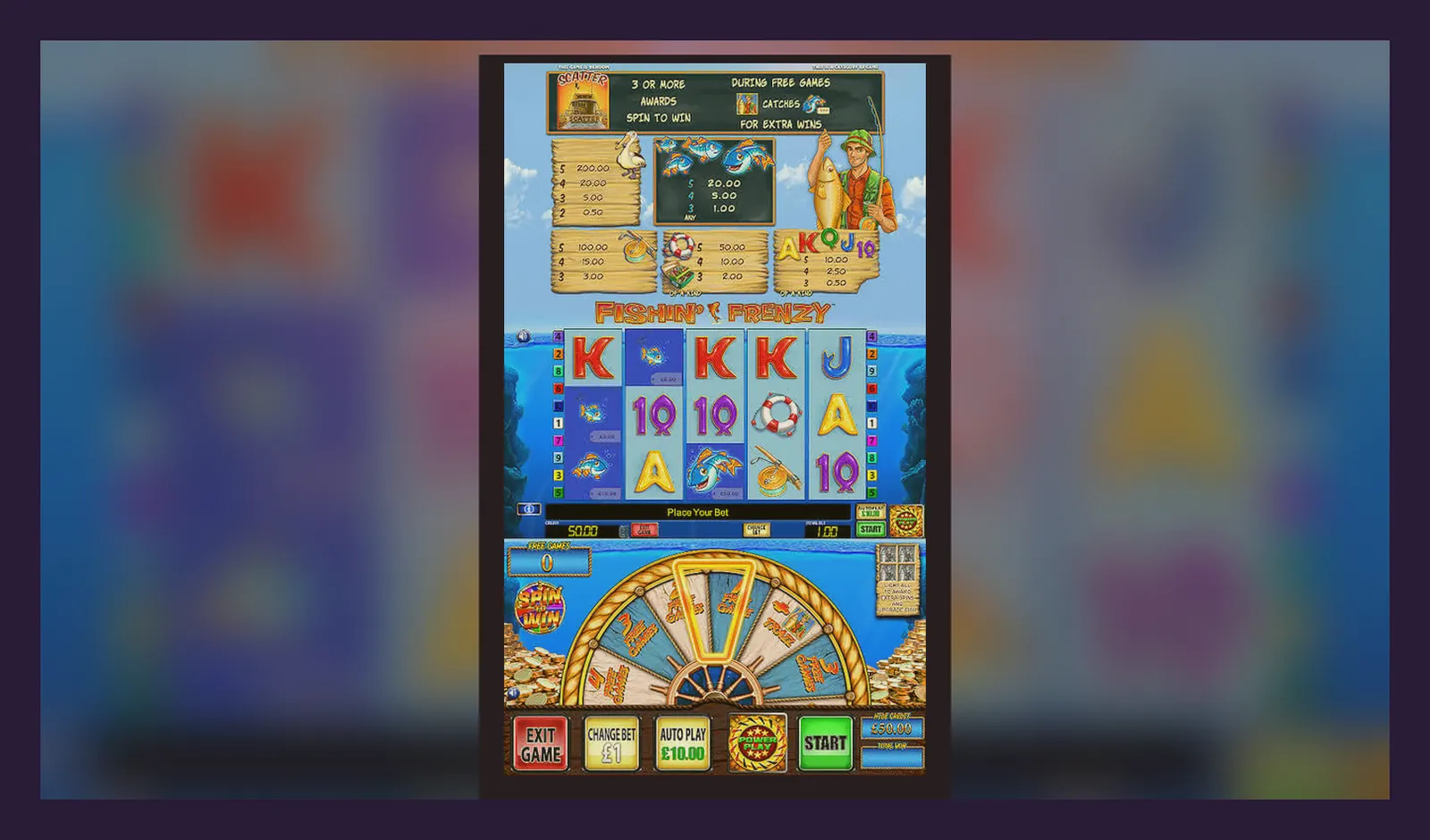
You open the operator app, tap the game tile, and the loading bar fills. Three seconds later you're looking at a 5×3 grid of cartoon fish, a blue ocean backdrop, and a stake selector that defaults to £1.00. The interface fits the screen, the buttons are thumb-sized, and nothing lags when you swipe between games. That's what a proper mobile build feels like.
The mistake costs money when you download the wrong file, grant permissions that shouldn't exist, or assume every «Fishin Frenzy app» in a search result is the real thing. This page walks you through the store card, the screenshots you'll actually see, four install routes with their risks, and the red flags that separate a licensed operator's build from a clone that wants your bank details.
The Store Card You'd See on a Licensed Operator's Listing
If the operator publishes a dedicated app on Google Play or the App Store, the listing will show a card with fixed fields. The numbers below are plausible examples for a casino app carrying Fishin Frenzy and other Blueprint slots; your operator's app may differ, but the structure stays the same.
The developer name must match the company holding the UKGC remote licence; if it doesn't, you're looking at a clone. The in-app purchase range reflects the affordability-check threshold of £150 net deposits a month and the £5 stake cap on slots, which means a £10,000 top-up would trigger checks before you reached the spin button. The age rating is always 18+ because that's the legal minimum in the United Kingdom.
Five Screens Described Without the Marketing Gloss
- Lobby: a scrollable grid of game tiles, each showing the slot's logo and provider badge. A search bar sits at the top, filters for provider and category run down the left edge on tablet, and a footer strip holds your balance, a deposit button, and a menu icon. Fishin Frenzy's tile sits among other Blueprint releases.
- Game view: the 5×3 reel grid fills the centre, the paytable icon sits top-left, settings top-right, stake selector bottom-left (a wheel or plus-minus buttons), and the spin button bottom-right. The free-spins counter appears above the grid when the feature triggers. No landscape clutter, no pop-ups mid-spin.
- Paytable: four or five scrollable pages showing symbol values at your current stake, the free-spins rules, and RTP. The figures update when you change the stake, so a £0.10 spin shows different coin wins than a £5.00 spin, even though the multipliers stay fixed.
- Deposit screen: a choice of debit card, PayPal, Apple Pay, Open Banking and paysafecard. Each method shows the fee (usually none), the minimum (often £10.00), and the maximum before affordability checks kick in. A reminder that credit cards are banned for gambling sits below the form.
- Account page: your deposit history, withdrawal requests, KYC status (a traffic-light icon: red for documents needed, amber for under review, green for verified), and links to GAMSTOP and BeGambleAware. The licence number and regulator logo sit in the footer, matching the UKGC public register.
If a screen asks for more permissions than the operator needs to verify your identity and process payments, or if the deposit methods include cryptocurrencies and wire transfers to personal accounts, you've opened a clone or an unlicensed site dressed up as an app.
Four Install Paths, Numbered Steps, and the Risk of Each
Most players reach Fishin Frenzy through one of four routes. The safest is the browser; the riskiest is an APK from a site you don't recognise.
- Open Chrome, Safari or Firefox on your phone.
- Type the operator's domain into the address bar (not a search engine, because paid ads can lead to clones).
- Log in or register; age and identity checks happen before you can deposit.
- Tap the game tile, wait for the load, and you're in. No download, no permissions, no storage footprint beyond cookies.
Risk: near zero if you typed the domain yourself and checked the UKGC licence number in the footer. The operator's server handles the game logic, your phone handles the rendering, and your balance updates in real time. The £5 and £2 stake caps apply automatically based on your verified age.
- Play the game in the browser as above.
- Tap the browser menu (three dots on Chrome, share icon on Safari).
- Select «Add to Home Screen» and confirm.
- A shortcut appears on your home screen; tapping it opens the site in a borderless window that feels like an app.
Risk: same as browser play, because it is browser play with a shortcut. No new permissions, no install process, and the operator can't access anything outside the browser sandbox. If the site updates, the shortcut points to the new version automatically.
- Search the store for the operator's brand name, not «Fishin Frenzy», because the game lives inside the operator's casino app.
- Check the developer name against the UKGC register; if it doesn't match, it's a clone.
- Tap «Install», grant the permissions the store requests (usually storage, network, and notifications), and wait for the download.
- Open the app, log in with the same credentials you use on desktop, and find Fishin Frenzy in the lobby.
Risk: low if you verified the developer name, medium if you skipped that step. The app requests permissions that a browser doesn't need—contacts, phone, SMS—so read the list. Storage and network are normal; access to your call log or microphone is a red flag unless the operator offers phone-deposit or voice-ID features, which UK casinos almost never do.
- A site offers an APK file for download, claiming it's the «official Fishin Frenzy app» or a modded version with better RTP.
- You enable «Install from unknown sources» in Android settings.
- You download the APK, tap it, and Android installs the app without the Play Store's checks.
- The app asks for permissions that make no sense—SMS, contacts, accessibility services—and you grant them because you want to play.
Risk: high to extreme. APK files bypass the store's malware scans, and a fake app can log your card details, intercept SMS two-factor codes, or install a keylogger. The supposed «better RTP» is a lie, because RTP is server-side and the operator controls it, not the app. If a site outside the operator's own domain offers an APK, assume it's a clone designed to steal credentials or money.
Phone Requirements That Actually Matter
Fishin Frenzy runs on HTML5, which means any phone made in the last five years will handle it. The operator's app or browser sets the floor, not the game.
- Android: version 7.0 or later, 2 GB RAM, and a browser that supports WebGL. Chrome 90+ is safe; older versions may stutter on the free-spins animations.
- iOS: iPhone 6s or later (iOS 13+), Safari or Chrome, and enough storage for the operator's app if you go that route (40–50 MB).
- Screen: 4.7 inches or larger. The game scales to smaller screens, but the stake buttons and paytable icon get cramped on anything below 4 inches.
- Connection: 3 Mbps or faster. A weak 4G signal will load the game, but spins may lag by a second, and the balance update can arrive late enough to make you think the spin didn't register.
Battery drain depends on screen brightness and connection type. A 30-minute session at 50% brightness on Wi-Fi costs about 8–10% battery on a two-year-old phone; the same session on 4G in a moving car can hit 15% because the modem works harder to hold the signal.
What the App Does and What It Doesn't
The operator's app is a lobby and payment shell wrapped around browser-based games. When you tap Fishin Frenzy's tile, the app opens a WebView—a browser window inside the app—and loads the game from the provider's server. Your stake, spins, and balance travel over HTTPS to the operator's platform, which logs every transaction and sends the results back.
The app does not store the game logic on your phone. It does not generate random numbers locally. It does not let you play offline or «mod» the RTP. It cannot bypass the £5 stake cap if you're over 24, or the £2 cap if you're 18–24, because those limits sit on the server and the UKGC audits them. If someone claims an app or APK removes the caps or boosts the RTP, they're lying or selling malware.
The app does store your login token, your last ten games, and your deposit methods (masked card numbers, PayPal email). That's normal. It should not store your full card number, your CVV, or your password in plain text; if you root an Android phone and inspect the app's data folder, those fields should be encrypted or absent. If they're readable, the app is broken or malicious.
Version Notes a Real Operator Would Publish
Operators update their apps every few weeks, usually to fix bugs, add payment methods, or refresh the game library. A recent update for a UK casino app might read like this:
- Added Open Banking deposits via Trustly; instant confirmation, no card fees.
- Fixed a layout bug that hid the stake selector on phones with notched screens when the game ran in portrait.
- Updated the KYC flow to request proof of address at the first withdrawal, not the first deposit, aligning with the April 2026 affordability-check rules.
- Improved the lobby search: typing «fish» now surfaces Fishin Frenzy, Fishin Frenzy Megaways, and Fishin Frenzy The Big Catch in the first three results.
- Removed the in-app browser for terms-and-conditions links; tapping a T&C link now opens your phone's default browser, fixing an iOS review-guideline violation.
If the update notes mention «increased RTP», «unlocked features», or «removed deposit limits», you're reading a fake changelog from a clone app. Licensed operators cannot alter RTP without the provider's and regulator's approval, and deposit limits are a legal requirement they cannot remove.
Spotting a Fake Clone and the Permissions That Scream Danger
A clone app copies the operator's branding, game library, and layout, but connects to a different server—often unlicensed, sometimes a phishing front. The goal is to harvest your login, card details, or both. The tells are small but consistent.
| Signal | Real operator app | Clone app |
|---|---|---|
| Developer name in store | Matches UKGC register exactly | Generic name, typo, or no match |
| Licence number in footer | Clickable link to UKGC register, correct format | Fake number, no link, or missing entirely |
| Deposit methods | Debit card, PayPal, Open Banking, paysafecard | Credit cards, crypto, wire to personal accounts |
| Permissions requested | Storage, network, notifications | SMS, contacts, phone, accessibility, location |
| Download source | Google Play, App Store, operator's own site | Third-party APK mirror, Telegram channel, forum |
| Update frequency | Every 2–4 weeks | No updates after initial release |
The permissions list is the fastest filter. A casino app needs storage to cache game assets and network to reach the server. It might request notifications to alert you about bonuses or KYC status. It does not need SMS access unless it's sending deposit-confirmation codes via your carrier, which UK operators stopped doing years ago in favour of app-based two-factor. It never needs your contacts, call log, or accessibility services. If the install screen asks for those, tap cancel and report the app.
The other red flag is payment routing. A real operator processes card payments through a PSP (payment service provider) that shows up on your bank statement as the operator's name or the PSP's name. A clone asks you to send money via bank transfer to a personal account, or to buy crypto and deposit it to a wallet address. Those payments are irreversible, unregulated, and untraceable, which is exactly what a scammer wants.
FAQ
Can I play Fishin Frenzy offline after downloading the app?
No. The app is a front-end that loads the game from the provider's server every time you tap the tile. Your phone doesn't store the reels, the RNG, or the paytable logic. Without a connection, the app shows the lobby and your cached balance, but the spin button won't work. This is standard for regulated slots, because offline play would let someone tamper with the RNG or bypass stake caps.
Why does the app ask for storage permission if the game runs in a browser window inside it?
Storage permission lets the app cache game assets—backgrounds, symbol images, sound files—so they load faster on the second session. Without it, every spin re-downloads the same 2 MB of graphics, which eats your data allowance and makes the game stutter on slow connections. The app doesn't store your spins or balance locally; those stay on the operator's server.
Is an APK from the operator's own website safer than one from a third-party mirror?
Yes, but only marginally. If the operator's site lists an APK download with a checksum (a long string of letters and numbers you can verify using a hashing tool), and the domain matches the UKGC register, the risk is low. If the APK comes from a forum, Telegram group, or a site called something like «casinoapks.net», assume it's either outdated or malicious. The safest route is still the Play Store or App Store, because Google and Apple scan uploads for malware and enforce update discipline.
Does the app use more data than playing in the browser?
Not meaningfully. Both routes load the same game assets from the same server; the app just wraps them in a native shell. A 30-minute session costs about 15–20 MB, whether you're in Chrome or the operator's app. The difference is that the app caches assets locally, so repeat sessions use less data—maybe 5–8 MB instead of 15–20 MB. If you're on a tight data plan, play on Wi-Fi for the first session, then switch to mobile data once the cache is warm.